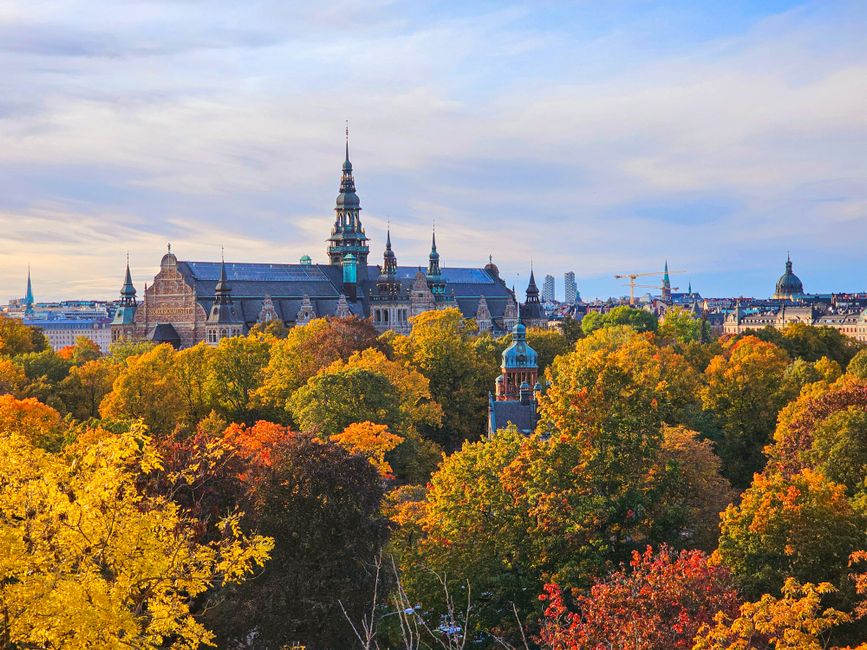
September and October bring a quieter, more local rhythm to Stockholm. The summer tourist surge has passed, prices tend to ease, and the city's parks turn copper and amber. For visitors who prefer a city on its own terms rather than at peak capacity, autumn is a genuinely good time to come.
The Best Parks and Green Spaces in Autumn
Djurgarden is the obvious starting point. This island parkland east of central Stockholm has long walking paths through mature trees, and the autumn colour can be striking. It is also home to Skansen, the world's first open-air museum, which opened in 1891. In the cooler months, Skansen's historical buildings and Nordic animals take on a different atmosphere — less hectic, more reflective. The Djurgårdslinjen ferry connects central Stockholm to Djurgarden and runs in season; check with SL or local timetables for autumn frequency before you travel.
On the south side of the city, Monteliusvagen in Sodermalm is a free walkway with sweeping views over Gamla Stan and the water. On a clear autumn morning, with low light sitting across the Old Town rooftops, it is one of Stockholm's better free experiences. No ticket, no queue — just show up.
Museums Worth Your Time in Autumn
Autumn is an ideal season for Stockholm's indoor culture. The Vasa Museum on Djurgarden houses the 17th-century warship Vasa, which sank on its maiden voyage in 1628 and was salvaged in 1961. The ship is 69 metres long and dominates the museum space in a way photographs do not quite prepare you for. Queues are noticeably shorter outside the summer peak.
- Fotografiska in Sodermalm is a photography and visual art museum with a programme that rotates regularly — worth checking what is showing during your visit.
- Skansen on Djurgarden also runs seasonal events in autumn; the open-air format works particularly well on cool, crisp days.
- ABBA The Museum, also on Djurgarden, is a reliably entertaining option on a rainy afternoon.
Stockholm's metro is worth a journey in its own right. Known informally as the world's longest art gallery, around 90 of its 100 stations feature permanent artwork. T-Centralen was the first station to display art — blue floral motifs by Per Olof Ultvedt cover the cave walls — and it remains one of the most photographed. A single SL ticket gets you in.
Food and Markets in the Autumn Season
Ostermalms Saluhall is Stockholm's historic covered food market in the Ostermalm district. It is a practical place to eat well at lunch or pick up produce, and the indoor setting suits autumn weather. The market brings together Swedish cheeses, cured fish, seasonal vegetables and prepared foods — a useful stop if you want to eat like a local without committing to a sit-down meal.
Across the city, autumn menus in Stockholm tend to reflect the season. Game, root vegetables, mushrooms and fermented or cured ingredients appear widely. Sweden uses the Swedish krona (SEK) rather than the euro, and Stockholm is almost entirely cashless — cards are accepted everywhere, so there is no need to carry cash.
Frequently Asked Questions
Q: Is English widely spoken in Stockholm in autumn?A: Yes. English is widely spoken throughout Stockholm, including in museums, markets, restaurants and on public transport. Tourists rarely encounter a language barrier.
Q: Do I need cash for autumn activities in Stockholm?A: No. Stockholm is almost entirely cashless — card payment is the norm everywhere, from museum ticket desks to market stalls. Carrying Swedish krona in cash is generally unnecessary.