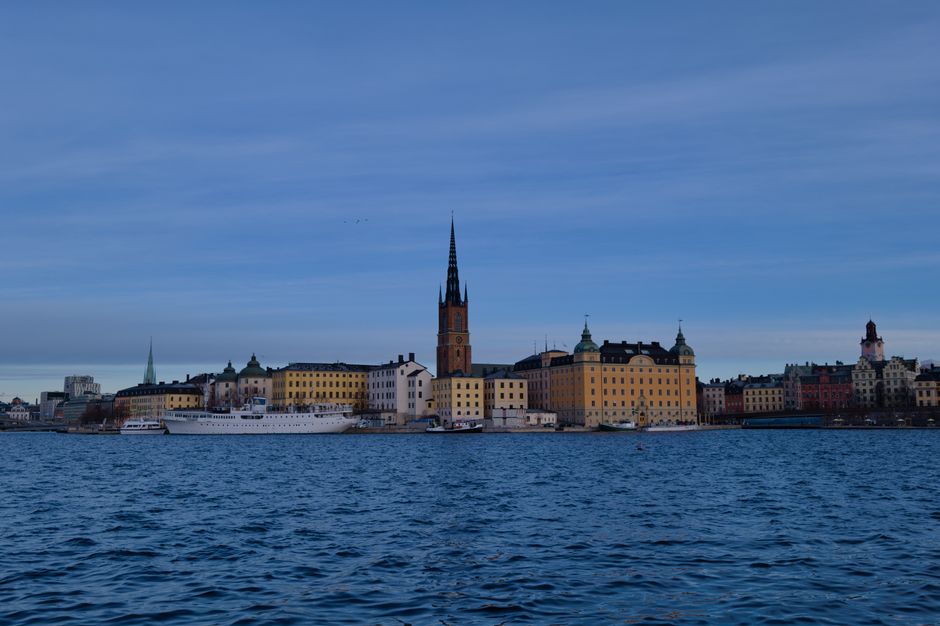
Stockholm is one of Europe's most practical cities for travelling alone. Card payment is the norm — cash is rarely accepted anywhere, so you never need to worry about carrying local currency. English is widely spoken across the city, from metro stations to market stalls. And because Stockholm is built across 14 islands connected by 57 bridges, moving between neighbourhoods feels like a series of distinct discoveries rather than a single undifferentiated sprawl.
The Best Neighbourhoods for Solo Explorers
Gamla Stan is the natural starting point. Stockholm's medieval Old Town sits on its own island and is compact enough to walk in a morning. Stortorget, the oldest square in the city, is surrounded by colourful 17th-century merchant houses and makes for a good orientation point. The streets are narrow and easy to get lost in — which, alone, is half the pleasure.
Södermalm suits solo travellers who prefer a less tourist-heavy atmosphere. The island south of Gamla Stan has a bohemian character, with independent shops and cafes you can find by wandering rather than planning. Monteliusvägen is a free walkway along the northern cliff edge with views across the water to Gamla Stan — one of the better vantage points in the city, and popular with locals as much as visitors.
Östermalm offers a different pace. The Strandvägen waterfront is good for a slow walk, and Östermalms Saluhall is a covered food market where you can graze without committing to a sit-down meal — ideal when you are eating alone and want flexibility.
Djurgården is where most of Stockholm's major museums are concentrated. The Vasa Museum houses a 17th-century warship that sank on its maiden voyage in 1628 and was salvaged in 1961 — the 69-metre ship is preserved almost entirely intact and takes at least a couple of hours to do properly. Skansen, the world's first open-air museum, opened here in 1891. ABBA The Museum and Gröna Lund amusement park, which dates to 1883, are also on the island. A solo day on Djurgården rarely runs short of things to do.
Getting Around Alone
SL operates the metro, buses, trams and local trains across the city. The metro — the tunnelbana — is practical and straightforward to navigate, and around 90 of its 100 stations feature artwork, making even the commute between sights worth a look. T-Centralen was the first station to be decorated, with blue floral motifs that run across the vaulted ceilings.
For Djurgården, the Djurgårdslinjen ferry runs frequently in summer and connects central Stockholm directly to the island by water — a more pleasant approach than the bus, and good for solo travellers who want to arrive somewhere feeling like they have actually travelled.
If you are arriving from Arlanda Airport, which sits around 40 km north of the city, the Arlanda Express train connects the airport to Stockholm Central in about 20 minutes and is easy to manage alone with luggage.
Practical Tips for Solo Visitors
- Carry your card, not cash. Stockholm is almost entirely cashless. Most places will not accept notes at all.
- Use the metro art as a reason to slow down. Each station has its own character — it is worth looking up from your phone occasionally.
- Fotografiska in Södermalm is a photography and visual art museum that works particularly well for solo visits — quiet enough to move at your own pace, with a strong programme of changing exhibitions.
- Day trips are easy alone. The Stockholm archipelago stretches to around 30,000 islands, islets and rocks, and ferry connections make it possible to reach quieter islands without a group or a car.
- Language is not a barrier. English is widely spoken throughout the city, so asking for directions, ordering food or buying tickets alone is rarely difficult.
Frequently Asked Questions
Q: Is Stockholm safe for solo travellers?A: Stockholm is generally considered a safe city for solo travellers, including those travelling alone at night. As with any capital city, staying aware of your surroundings in busy tourist areas is sensible, but most visitors travelling alone report feeling comfortable throughout the city.
Q: Do I need to speak Swedish to get around Stockholm alone?A: No. English is widely spoken across Stockholm — in shops, museums, on public transport and in most accommodation. You can travel independently without any Swedish at all, though locals tend to appreciate a few basic phrases.
Practical tip: Transport passes, museum admission fees and ferry schedules can change between seasons. Check current details with the SL website or local tourist information before you travel, rather than relying on prices listed online.